Imagine you’re 27 years old. You’ve just received an Academy Award nomination. Directors talk about you like you’re a once-in-a-generation find! Nobody doubted the amount of raw talent and ability that you have. The talent was never in question. Hollywood was abuzz with your name — but they started to question everything else. This is the setting for the collapse of one of the most talented and prolific actors of our generation: Robert Downey Jr.
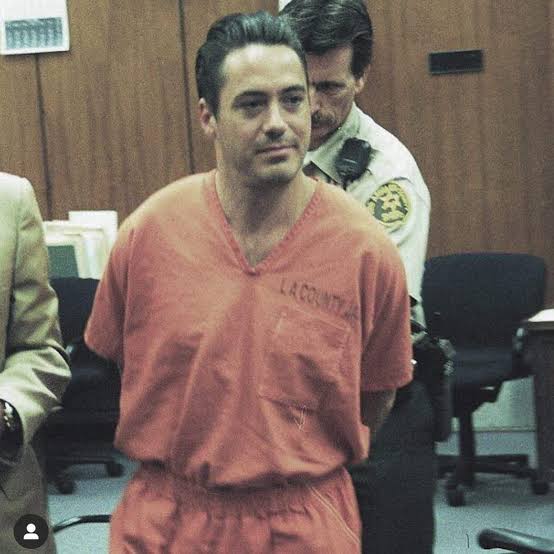
Downey, in his typical relaxed, introspective, and slightly self-deprecating humor, would often joke that his father only gave him two things: a love of film, and drugs. His father was an underground filmmaker and thought it would be great parenting to let his 6-year-old son try marijuana for the first time. Decades later, Downey described those childhood moments in a way that stops this parent cold: drugs were how his father expressed love to him. As a father myself, I can tell you that is downright terrifying! I honestly can’t do enough mental gymnastics to put myself in the mindset of a father who thinks it’s a good idea to supply drugs to a young boy. Before Downey was old enough to ride a bike, his father had successfully created an addict.
The collapse, in order
It’s no surprise, then, that the collapse came — and it wasn’t a surprise to anyone, least of all Downey, who knew it was coming. It was a game of spinning plates, and eventually, the plates fall. It just took 20 years of successful lying, dodged accountability, and an abundance of talent before the collapse would arrive.
June 1996: Robert is pulled over on Sunset Boulevard for driving erratically, as police would later say. Frankly, eyewitness reports say he was driving like a man possessed! The police find an unloaded .357 Magnum alongside crack cocaine and heroin. He’s 31 years old at this point, easily one of the most gifted and recognizable actors in all of Hollywood, but no amount of acting fame or wealth was going to make that traffic stop disappear.
One month later, while out on parole, he wanders into his neighbor’s home in Malibu. He’s completely high, and he passes out in one of their beds — a child’s bed, in a stranger’s home. Imagine the horror of coming home and finding a Hollywood movie star passed out in your children’s bedroom! Your child, only 11 years old at the time, is stunned and confused. How do you reconcile and explain that?
This all happens pre-social media, in a very different era of how we felt about drug addiction and crime. The crazy thing is that the press called this the “Goldilocks” incident, a reference to which bed he crawled into. They laughed it off as cartoonish frivolity, when the reality is that he was high on illegal drugs and had walked into someone else’s home — while on parole. These are incredibly serious circumstances, and in a modern context, that person would normally be sent directly to jail. Do not pass go. Do not collect $200. If he weren’t a famous Hollywood actor — if he were you — how do you think the law would have treated him?
Why he kept walking
Unfortunately for Robert Downey Jr., the law was too kind to him, and this would create an issue going forward. The courts tried rehab. He walked out of one facility through a window. The courts then mandated treatment. Of course, he relapsed. They tried probation. He missed his drug tests.
This is what happens with an addict. There’s something about an addict’s brain that convinces them they can fool the world. Now here’s the part of the story that bothers me tremendously, as someone who has faced a judge and the court of public opinion.
Let me be very clear about this, because I refuse to dance around it. Technically, he wasn’t breaking — but he was entering. Take the exact same facts: a .357 Magnum in the car. Crack cocaine and heroin. A man high on narcotics walking into a stranger’s home — while on parole. Now change one thing. Make him a young Black or Mexican man from the wrong neighborhood instead of a white movie star. In 1996 — the era of three strikes and the War on Drugs — that man goes to prison. Immediately, and for a long time. No third appearance in front of the same patient judge. No rehab carousel. And the press doesn’t give him a cute nickname like “Goldilocks,” either. He gets a mugshot on the evening news.
Robert Downey Jr. walked, over and over, because of who he was. I’m not saying that to tear him down. I’m saying it because his comeback story only makes sense if you’re honest about the head start. Our court system, because of his fame and status, placated him over and over, with chances a normal citizen — never mind a poor one — would never see. You could easily go to jail for 7 to 10 years on those facts. And here’s the part that should stop you cold: even with every one of those advantages, the addiction still beat him. That’s how strong the thing he was fighting was.
What he said to the judge
Back in 1999, Robert Downey Jr. stands in front of Judge Lawrence Mira — the same judge, for the third time. Downey said the most honest sentence any addict has ever said in a courtroom: “It’s like I’ve got a shotgun in my mouth with my finger on the trigger, and I like the taste of the gunmetal.”
Go back and read that again. He wasn’t performing remorse. He was admitting that the thing doing him the most harm — the thing that had cost him relationships, cost him multiple roles, cost him hundreds of thousands of dollars — he liked it. The thing that was killing him! He enjoyed it. And anyone who has been in a self-induced destructive loop of substance or ego can connect with that at some level. When you’re addicted — to drugs, alcohol, gambling, sex, whatever your vice might be — your brain can rationalize and justify the most insane things to give you the space to continue.
Fluorescent lights sit above you in a courtroom, with a very low, gentle hum. That hum is tinny. There’s a certain smell in the room: well-worn carpet and varnished wooden tables where many men and women have sweated under the fear of being caught, of being sentenced, of being embarrassed, of being terrified.
The courtroom is an interesting place. There’s a certain noise of shuffling paper and whispering. There’s always an officer or two, typically for the protection of the judge, sometimes a witness. They look bored out of their skulls, but there’s always a tension in the air — not just between the judge and the defendant, but between the lawyers, both prosecution and defense. It’s not just reverence or respect toward the judge. No, it’s fear! It’s the concern of ever misstepping in front of a judge who has far too much power and having that judge decide against them.
I can only imagine that as Robert Downey Jr. stood there, he felt the tightness in his chest anybody would feel when a sentence is about to drop — a hammer about to change his life. The judge sentenced him to 3 years, and again, being a Hollywood elite saved him. Downey served less than 12 months, at the California Substance Abuse Treatment Facility at Corcoran State Prison. It was a real prison, sharing a cell block with men serving life. Years later, he described it simply: “You could feel the evil in the air.”
Uninsurable means unemployable
The funny thing is, sitting in a cell block with murderers and lifers was not enough to change Mr. Downey. After he got out, it became very clear, very quickly, that prison did not fix him. The fear of losing his freedom was not a significant enough motivator to change him. He landed the role of a lifetime on a hit television show called Ally McBeal. That raw talent can be a burden indeed. He won a Golden Globe for it — and the fame tempted him again, and he relapsed. He was arrested in a Palm Springs hotel room over Thanksgiving weekend in 2000. They found him wandering barefoot in Culver City in April 2001. Ally McBeal finally fired him. Insurance companies now classified him as uninsurable, which meant no studio could hire him even if it wanted to, because no one would underwrite him.
Understand what uninsurable means. It means unemployable. It means the only thing he had ever done in his entire life — acting — was no longer possible. The industry had looked at Robert Downey Jr. and, despite his tremendous talent, concluded that he was a worse bet than an empty chair. The Oscar nomination didn’t matter. The Golden Globe didn’t matter. When institutions decide that you are a liability, your past accomplishments are not a résumé; they are your eulogy.
Many retellings call this his second chance, but I disagree. He had three chances with the judge — three incidents — before the judge was forced to put him in jail for a year, and then two more after jail with Ally McBeal.
Every one of these stories follows the same pattern. I send one a week — theirs and mine. Join The Rebuild →
The years nobody puts in the montage
And all those friends, those fans, those sycophants? Where were they now? Everyone in his life had watched him torch everything he had ever created — not once, but five times, by my reckoning.
In 2004, he wandered onto the stage of The Oprah Winfrey Show. Downey admitted that the lie he kept telling himself was that it was all manageable. This is the lie all addicts tell. And then he described, in detail, the moment the lie died.
In 2003, he was sitting in his car on the beautiful Pacific Coast Highway. He stopped at a Burger King. The burger, he later told Empire magazine, was so disgusting that something in him broke loose. He looked at his life in absolute tatters, finally hitting bottom. He drove to the ocean, pulled all of the narcotics out of his car, and threw the drugs into the water. It’s funny what can make us change. It doesn’t have to be some massive thing. Sometimes it can be so small: a bad hamburger! That was the hinge of one of the greatest comeback stories in American pop cinema. Not an intervention, not an epiphany on a mountaintop, not a conversation with the Dalai Lama, not a prayer from the Pope. A moment as ordinary as any one of us has ever had. So ordinary, you might say it’s insulting! Rock bottom does not tell you when it’s coming. Rock bottom doesn’t tell you when you get there. Rock bottom is the moment you officially decide — somewhere deep down in your guts, where it seethes, where it rots, where it stings in the bile of your bowels — that you’ve had enough! That this just isn’t it anymore! The bottom doesn’t look like a rocky montage. It looks like a crappy parking lot.
“It’s not that difficult to overcome these seemingly ghastly problems. What’s hard is to decide to do it,” Robert Downey Jr. said to Oprah, sitting on her very famous sofa.
I’ve never touched a drug in my life, but this really resonated with me! The rebuild is far slower and more humiliating than the fall. The fall took more than 5 years. The rebuild took longer, and it ran on other people’s mercy — something you have no control over.
The two men who bet on him
Mel Gibson, his friend from decades earlier, personally paid the insurance bond no company would write so that Downey could star in The Singing Detective in 2003. I want to highlight this for a moment. Mel Gibson — who had been a longtime friend, and who had also been lied to by Robert Downey Jr. — had the grace to see who Downey really was deep inside. As someone who was abandoned by family members and friends through my own collapse, I can tell you: when friends stand by your side because they know you, and they know you’re not a piece of shit, it is one of the greatest feelings and burdens you will ever experience! Without Mel Gibson, there is no Downey. Robert — unemployable, broke, destitute — needed his friend to co-sign on his career the way a 16-year-old needs his dad to co-sign for a car. That same year, producer Joel Silver held back part of Downey’s salary as insurance against a relapse while they worked together on the movie Gothika. He worked under conditions designed around the assumption that he would fail.
To me, this is where the hero’s journey begins. The industry assumed he would relapse. They assumed he would fail. They put incredibly difficult constraints on him, including reducing his pay quite dramatically and treating him, frankly, like a child — deservedly so. He took all of it, and this is the part worth underlining: he didn’t complain about the indignity. He didn’t go on entertainment news and whine about how unfair it was. He took his terms. He showed up sober. He knew the cast and crew were giving him the watchful side-eye, and he started banking small wins. Two smaller films — Kiss Kiss Bang Bang in 2005 and Zodiac in 2007 — reminded Hollywood, and all of us, who RDJ really was.
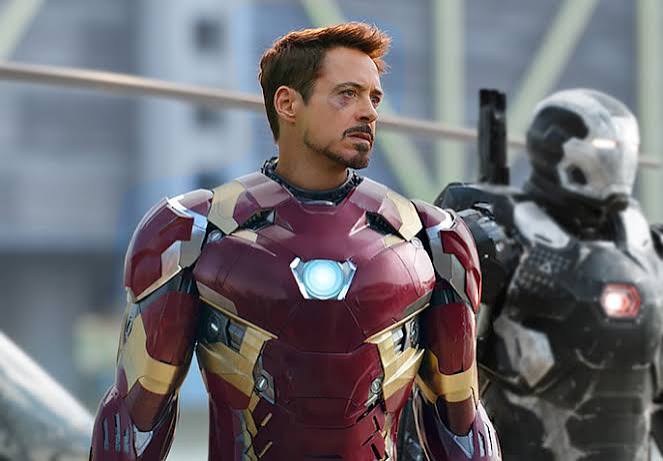
And then, the moment. The Hail Mary — that little bit of luck. Jon Favreau fought, over strong studio objections, to cast him in a Marvel movie in 2008. Downey was to play Tony Stark.
Favreau won the fight. They hired Downey and paid him $500,000 for Iron Man. The Iron Man franchise went on to make that studio multiple billions of dollars, and within a decade, RDJ was the highest-paid actor on the planet — reportedly making $50 million to $75 million a year in the role nobody wanted to insure him for. The industry that had priced him as less than zero, unemployable, had now repriced him as priceless. What’s important to understand here is that the asset did not change. The man did.
Hugging the cactus
Fast forward to 2011 and an awards dinner in his honor. Downey used his moment to do something almost nobody does: he spent it on someone else. Mel Gibson — by then the most radioactive man in Hollywood after his own public collapse — had been Downey’s lifeline in 2003.
Downey stood at the podium. He looked out into the crowd, beaming, and called Gibson up. He asked the room to forgive his friend, saying he had hugged the cactus long enough. He explained that when he’d needed help, Gibson had told him that if he took responsibility for his wrongdoings and embraced that painful, prickly process — as he described it, hugging the cactus — his life would work again. As we all know, it did. The only thing Gibson had asked in return was that someday, Downey would help the next guy. So here’s the pattern, and it’s the same pattern every time, no matter whose comeback it is — regular Joe Six-Pack, me, you, or a famous Hollywood actor. The comeback is not complete when you get your money back, when you build it all back up. The comeback isn’t complete until you turn around and help pull up the next person.
Ask yourself this: What if God chose you to go through this pain and suffering, this collapse, because He knew you could take it — and He knew you would turn around and be able to help and shepherd others who couldn’t?
What this actually means for you
Take away the fame, and the story is blunt and simple. The same architecture as every rebuild. Downey’s talent survived the entire collapse untouched. There’s no question he was an amazing actor in his 20s and is at least as good, if not significantly better, now — that remained true his entire life. Most of us aren’t fighting our weaknesses. We are fighting our oldest habits, oftentimes the ones we don’t want to face. And the system punished him long after the sentence ended. Prison was just 12 months. The news stories lasted for years and years. Being uninsurable meant being unemployable. Being unemployable can last forever.
I call this wearing the Scarlet F, and you can read that chapter here. Once you’ve had a massive collapse — especially in this public era, where nothing can be hidden — you wear that Scarlet F for the rest of your life. But it’s up to you: do you own the story, or does everyone else?
For Downey, the decision was the whole battle. He said it himself: doing it wasn’t hard. Deciding to do it was. Every rebuild starts with a decision made in an unremarkable moment, usually alone, often in a parking lot. I can tell you from my own experience: all I wanted to do was run and hide, pull the sheets up over my head. I was letting the world own my story, just like Robert Downey Jr. did for many years. But at some point, he and I — and hopefully you — make the decision to own the story, own the collapse, lean into it, and start the slow, arduous grind of rebuilding everything from the ground up. Remember that your comeback, at some point, will run on the humility and grace of other people. Whoever your Mel Gibson is — whoever co-signs your insurance bond, or withholds your salary, or gives you the small movies — accept the terms. Downey accepted all of them, terms built on the assumption of his failure, and he outworked that assumption without complaint. He owned his shortcomings. He owned his mistakes. And he got to work. When you read about it on a page, the time goes by quickly — but do you have what it takes to be stared at, laughed at, and judged, day after day? Can you do that for 1,826 days in a row? Can you toil away while other people sit, judge, and laugh at you — for 1,826 days in a row — with no guarantee there will be a payoff? That’s 5 years! Robert Downey Jr. put a shotgun’s taste into words in a courtroom, served his time in a real prison, got out and fell flat on his face, got fired, became uninsurable and unemployable — and then became the most bankable actor alive. Nobody gave that to him. He made a decision, and then he built it: one humiliating, co-signed small win at a time.
You are not finished! You haven’t even gotten to the good part yet!
You haven’t missed your chance. Built by Failures is for people who aren’t finished yet. Real stories. Hard lessons. Second acts. Join The Rebuild.