I remember the air was warm. I’m sitting on the patio of a friend’s house, looking out over his backyard, untamed wildlife in the background. The air was still. It was late in the afternoon, the sun starting to set, and my friend, who I was enjoying a cigar with, casually mentioned that I should talk to his friend about my experience of going to federal prison. He explained that his friend had also gone to federal prison when he was a young man. He had been pardoned during President Trump’s first term in office and later, at the behest of the president himself, had been asked to head up the Bureau of Prisons.
If you’re not aware, the Federal Bureau of Prisons is ranked dead last by the U.S. government in terms of efficiency, job quality, waste, fraud, and abuse. By pretty much any metric, it is the worst-performing department within the government. Now, regardless of what side of the aisle you sit on, I think we all know the government is not exactly the peak of efficiency — and even within that, the Bureau of Prisons is last. President Trump thought, “Who better to fix the prison system than a former resident?” My friend said, “Yeah, we should give him a call… right now, he might still be up.” I laughed and said, “Sure, I’d love to talk to him.” He picked up his phone, dialed the number, and I heard a crackle — “Hello” — over the speakerphone.
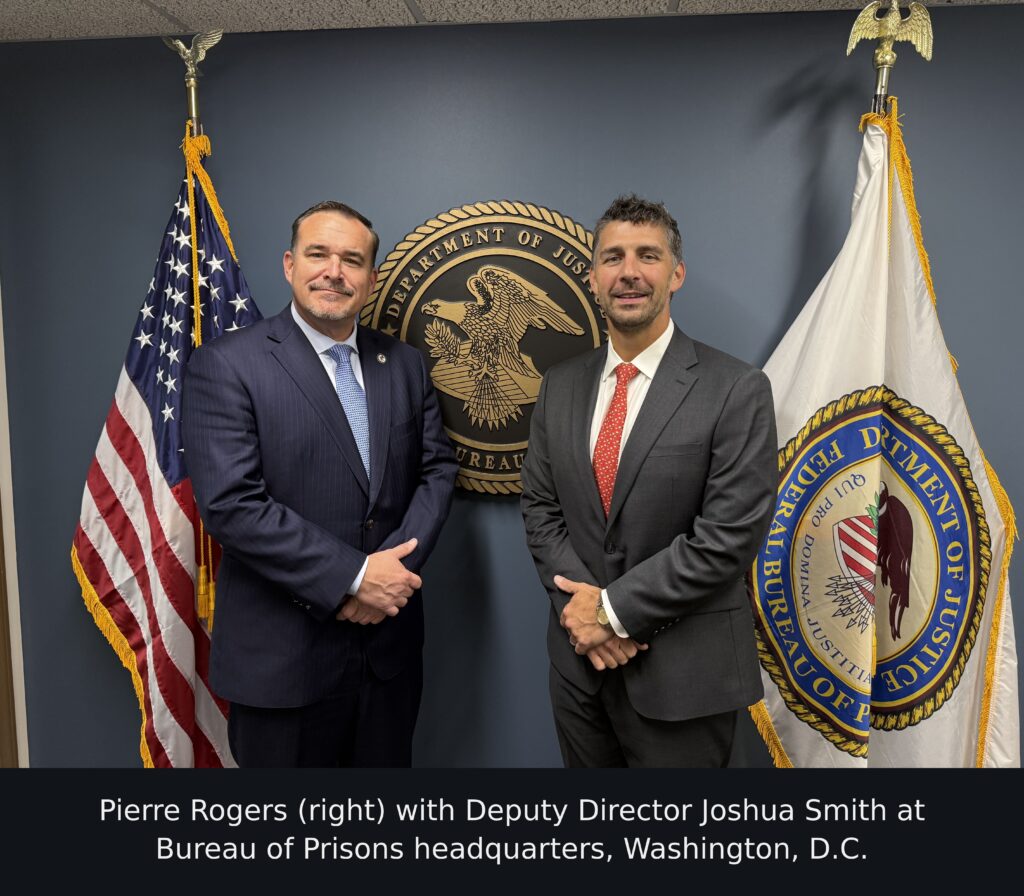
Suddenly I was speaking to Deputy Director Joshua Smith. It was very late on the East Coast, and he was still at the office working. He mentioned that he was tired, that he wanted to go home, get some food, and get to bed, as he had been working long hours for many days in a row, no days off.
I just mentioned that it was a pleasure to meet him. I said, “Good luck on the difficult task and journey ahead. I wish you all the best in trying to clean up and make efficient a very old and outdated arm of the government that, frankly, most regular people don’t want to pay attention to.” If we’re being honest, it’s the ugly underbelly of society, and so the proper folks of society would like to turn a blind eye to it and pretend it doesn’t exist. For those who have been there, even for as brief a time as I have, it’s a real place with real human beings. When you look at the numbers, millions of Americans have gone through our prison system — state or federal — at one point or another. Whether we like it or not, you can judge a society by its prisons, and I think we could all agree we could be doing a better job.
Mr. Smith asked me some very direct questions, and I responded to the best of my ability, as clearly and concisely as I possibly could. I talked about what my experience was, the people that I saw there. The Hollywood version of prison is very far from the reality of prison. I talked about mental health. I talked about some of the conversations I had had with my fellow inmates at the time, trying to give him some insight into what these men need to come back into society as productive members of it. They need things like skills and hope and faith. This conversation turned into an hour.
At the end of it, he insisted that I come to Washington, D.C., to the headquarters of the Bureau of Prisons, and sit down with him and a member of his staff to discuss things in more detail and provide my insight. I said that I would be happy to talk about the mental health of the residents: what programs I thought were valuable, what programs were available that people didn’t really seem to use. What I wanted to do was somehow, in some way, let the people inside know that we’re still there, that they weren’t forgotten, that they mattered — and, if it were possible, help guide some resources at every federal facility toward what the needs of the inmates actually are, to better put them in a position of success when they leave. I thought that was important.
What I found myself doing was something a little bit different. I wanted to humanize the inmates who were there. Many of the people at the Bureau of Prisons don’t really get to spend any meaningful time with these human beings, these incarcerated masses. They don’t get a chance to know them, and so it can be very easy to think of them as just another person, just a number, really. Once you get to know some of these people and understand their struggles and where they came from, you can apply a little empathy. Now, just because you have empathy for someone doesn’t mean you forgive them for their transgressions, but it does mean you get to a deeper understanding of who they are, why they made the decisions they made, and, with any luck, are able to provide the guidance and resources to put them on a better path. Isn’t that what we all want? Wouldn’t we like everyone in society — not just the formerly incarcerated — to be on a better path, to be better community members, to be more considerate, to contribute more? My goal in the beginning was to give my thoughts about programs, but in the conversation, sitting down at the Bureau of Prisons, I ended up talking about empathy and understanding. But I’m getting ahead of myself.
I remember flying to Washington, D.C., less than a year after I had come home from the Bureau of Prisons. I am hopping on an airplane to go to the belly of the beast — to walk into the headquarters of the Bureau of Prisons in downtown Washington, D.C., right alongside the FBI building. To walk in among the executives, the decision-makers and leaders, while still under supervised release, where I had to get approval from my probation officer to even be there, so that I could talk to them about the human condition.
It was the most surreal moment of my life. It was like a dream. I was numb. Walking through, getting security badges — the background checks had already been done. This is not a light task, right? This is serious. We were escorted through security, badges given, brought upstairs into the conference room. We sit down, and a handful of members of the Bureau of Prisons came in and introduced themselves to me. Deputy Director Joshua Smith introduced me to the group as a former customer, and everybody chuckled. Including me.
Now, I have no vested interest in being here. It cost me time and money — things I don’t have a lot of — but I felt compelled to help the people who were there in any way, shape, or form that I could. I started my conversation with them by telling them how I got there, how I became a former customer, as it were. I wanted to speak with absolute honesty and pour my heart out onto the table, and I believe that I did that.
I’m sure if I could go back and watch my performance, if that were possible, you would probably see a blubbering, stumbling, stuttering person, a bundle of nerves. What I hope I came across as is just intensely vulnerable. I wanted to tell real, humanizing stories of the people who were there: some of the good guys who work incredibly hard and do a good job, staff members who go above and beyond for some of the inmates.
I wanted to give credit where credit was due, to both staff and inmates — and yes, there are both that do exceptional jobs. What I ended up doing was really talking about the human element: how some of these men, who outwardly want you to believe they’re the toughest, scariest people in the world, on the inside are incredibly scared, shattered. What they need is empathy and compassion.
I didn’t advocate for silly things like less punishment, better beds, better food — all of the things that seem obvious. This is punishment, after all. You made a mistake, you’re being punished. Fine. What I tried to focus on was this idea: if we expect these men to go back into society, be good people, be contributing members, and not fall back into illicit activity — either because they want to or because they have to — then we need a way to understand them as human beings, to provide a little empathy and understanding. I believe both of those things can exist. I believe you can look a person in the eye and tell them, “Hey, you’re being punished for the decisions you made. These are consequences for your actions. But also, you aren’t a piece of shit. You do have value, and you can go out into the world and become a great husband, a great father, a great brother, a great community member, a successful business owner, a great teacher — someone of merit and value, a leader.”
But it’s only through intense empathy and understanding of the human condition that we ever get to that point.
I will tell you that, emotionally, I feel like I vomited onto the table — just poured my guts out. What was scheduled as a light-hearted, 30-minute meeting with all of these busy executives went far beyond an hour. No one wanted to get up from the table, because they felt the connection to the people I was talking about.
Stories of inmates who were crying because they had to leave prison, because they had been there for so long. They didn’t have any friends, family, or resources to go home to. Their friends and family and resources were in prison.
Conversations with young men who lived a better life inside a camp than they did back at home. When you get real insight into stories like this, it completely shifts how you look at these people. Yes, I acknowledge that some of them are very bad people, and they will always be bad people. I acknowledge that. But many of these people aren’t. They’re actually good people who made a mistake, took a shortcut, made a bad decision. They’re doing their time, and they are terrified of going home. Their prison is as much going home as it is being there.
Through my experience, what I learned is that vulnerability, empathy, and love isn’t a weakness. It’s absolutely a strength. It provides incredible power and fuel. I’m very humbled and grateful for the opportunity to share my story.
— Pierre


Next chapter: The Company I Built in My Head →